
Why Does My Garage Door Smell Like Burning Rubber?
- August 20, 2026
- 10:05 am


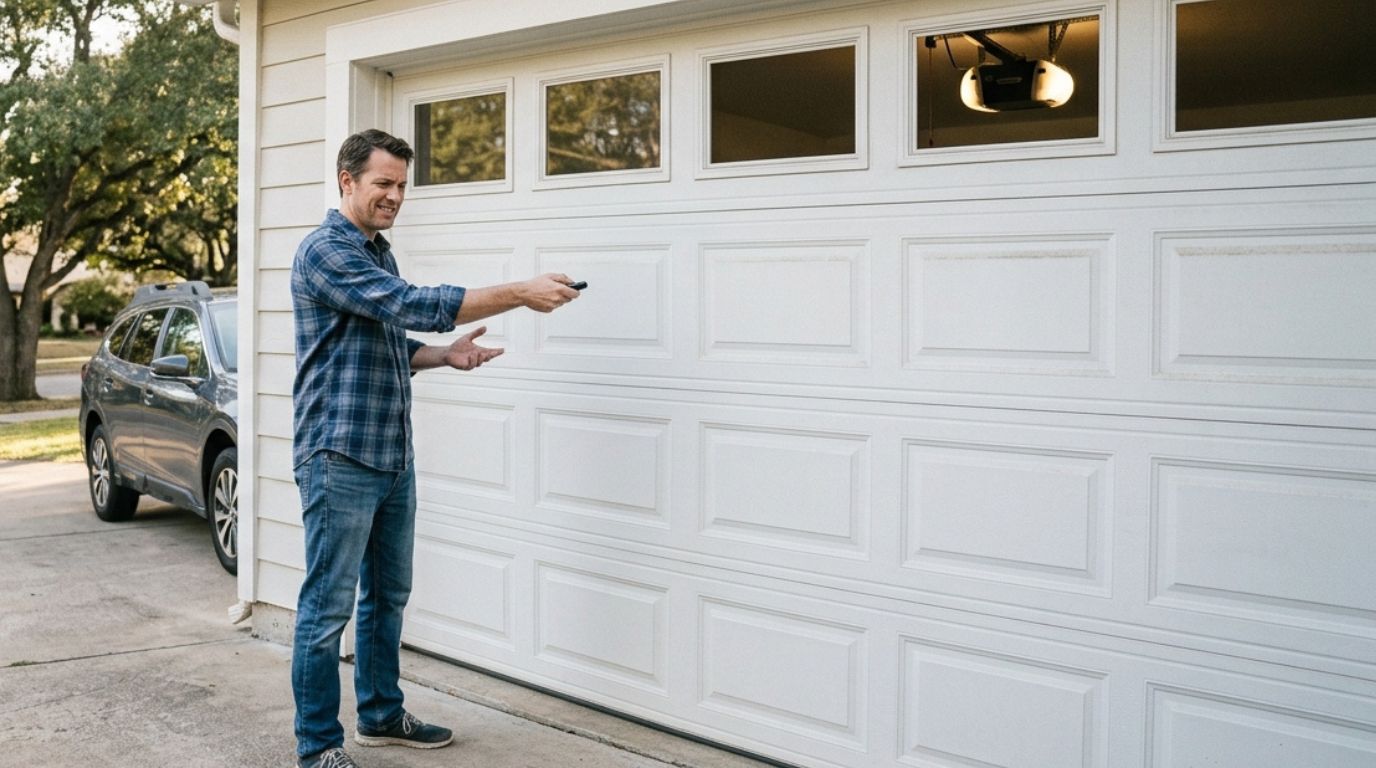
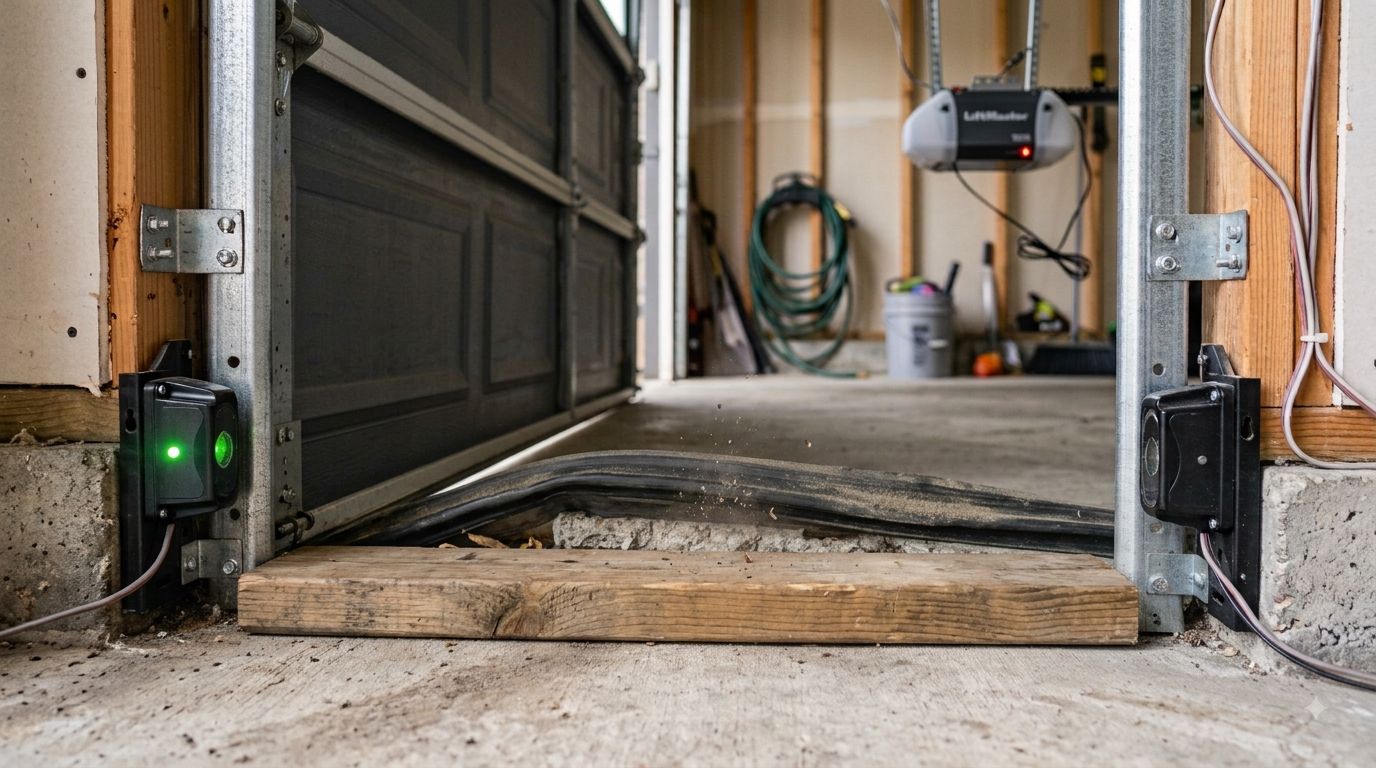
A garage door smell like burning rubber is never something to shrug off. It’s your system telling you it’s under real stress, whether that’s mechanical strain, an electrical fault, or both. Unlike a grinding noise or a slow cycle, this one comes with an actual safety dimension, so it’s worth understanding quickly rather than waiting to see if it goes away.
What Actually Causes a Garage Door Smell Like Burning Rubber
Two different things can produce this smell, and telling them apart matters:
Mechanical overheating. If the opener motor is straining because of a broken spring, an out-of-balance door, or resistance somewhere in the system it draws more power to compensate, and that extra load generates heat. Two specific parts are usually where the actual rubber smell comes from: a rubber drive belt on belt-drive openers slipping or dragging under too much resistance, and nylon or rubber garage door rollers that have dried out or gone stiff, creating friction against the track with every cycle. This is the most common cause overall, and it often shows up before the opener fails outright.
Electrical overheating. Damaged wiring, a loose connection, or a failing internal component can produce a hot-plastic or melting-insulation smell that’s distinct from ordinary mechanical odor. One specific and often-overlooked culprit: a failing start or run capacitor inside the motor. A weak capacitor forces the motor to draw significantly more current than normal to do the same amount of work, which shows up as a loud hum, sluggish operation, and rapid heat buildup sometimes before any other symptom appears. This version carries more risk than mechanical friction, since it points toward the kind of fault that can lead to an electrical fire if ignored.
How to Tell Which One You’re Dealing With
Pay attention to timing. If the smell only shows up while the garage door opener is actively running, the motor or its wiring is the likely source. If it appears after several cycles of use, old lubrication burning off from friction at the rollers or hinges is a more likely explanation. A smell that lingers even when the door isn’t moving at all is the most concerning version of the three, and shouldn’t wait.
A Cause Worth Knowing About: Nesting Birds
It’s an easy one to overlook, but it happens more than most homeowners expect: birds building nests inside the opener housing. A nest packed against a motor or electrical component is a genuine fire hazard, not just a nuisance if the smell coincides with any unusual sounds or debris near the unit, this is worth ruling out.
Belt Tension Matters Too
On belt-drive openers specifically, an over-tightened belt creates constant unnecessary friction against the drive components, while an under-tightened belt can slip and drag rather than moving smoothly both generate heat and both can produce a rubbery burning smell even when nothing is actually broken. Belt tension is usually adjustable, but it’s easy to get wrong without the manufacturer’s specific torque or deflection guidance, so this is worth having checked rather than adjusted by feel.
Why Didn’t the Thermal Overload Switch Shut It Off?
Most modern garage door opener motors have a built-in thermal overload switch designed to cut power automatically if the motor overheats which raises a fair question: if you’re smelling burning rubber, why is the opener still running at all? A few explanations are common. The switch may not have tripped yet, since it usually responds to sustained heat rather than the earliest stages of a problem meaning the smell can appear before the safety cutoff engages. Dust and debris buildup around the switch can also delay or interfere with how quickly it responds. And on rare occasions, the switch itself can fail, which removes a layer of protection you’d otherwise be relying on. None of these are reasons to keep testing the door and see what happens; they’re reasons to treat the smell itself as a warning, rather than waiting for the motor to shut itself off.
What to Do Right Now
- Stop using the door. Continuing to operate it while it’s producing this smell risks turning a fixable issue into a failed motor or worse.
- Cut power to the opener, unplug it or switch off its breaker if you can do so safely. The door still operates manually via the emergency release cord.
- Look for visible warning signs: scorch marks, discoloration, or any smoke, however faint. According to NFPA’s home electrical safety guidance, these are signs that shouldn’t be treated as minor.
- Don’t attempt to open the motor housing, inspect the wiring, or test the capacitor yourself. This is electrical work, not a DIY task.
- Call a professional promptly, especially if the smell is strong, persistent, or accompanied by any smoke. A technician can identify whether a belt, roller, capacitor, or thermal switch is the actual source before it becomes a bigger repair Metro Atlanta homeowners can see garage door repair options in Roswell for service area details.
Why This Isn’t a “Wait and See” Situation
A burning smell is a genuine warning sign, not a quirk to note and move past. Continued use can cause permanent damage to the opener, degrade wiring insulation further, and in serious cases create real fire risk. A garage door smell like burning rubber that’s addressed early before it becomes smoke or a failed motor is almost always the cheaper and safer outcome.
🚨 CRITICAL SAFETY WARNING & ACTION REQUIRED
If you detect a persistent burning odor, see smoke, or notice scorch marks on your opener unit, do not attempt to operate or fix the door yourself. Electrical shorts and high-tension garage door springs pose severe risks of shock, fire, and bodily injury.
Schedule an Emergency Safety Inspection Today: Unplug your opener unit immediately and call a certified technician to safely diagnose and repair your system before operating it again. Metro Atlanta homeowners can access local technicians and garage door repair options in Roswell for immediate assistance.
FAQ
Should I be concerned if I smell burning rubber near my garage door?
Yes. Even if it turns out to be a minor cause like old lubrication burning off, it’s worth investigating the same day rather than waiting to see if it happens again.
Why does my garage smell like burnt rubber but there’s no visible smoke?
Heat and odor often appear before smoke does. A smell without visible smoke is still worth stopping and checking, not a sign it’s automatically minor.
Can a broken spring cause a burning smell?
Yes. A broken or weakened spring forces the opener motor to lift more of the door’s weight on its own, which increases strain and heat, a common indirect cause of this smell.
What does it mean if the motor is humming loudly along with the smell?
A loud hum combined with sluggish movement often points to a failing start or run capacitor, which forces the motor to draw much more current than normal and heat up quickly. This is an electrical component issue, not something to diagnose by ear alone.
Shouldn’t the opener’s safety switch shut it off before this becomes a problem?
Most openers have a thermal overload switch for exactly this reason, but it typically responds to sustained heat rather than the earliest signs of a problem, and dust or a failed switch can delay it further. Don’t rely on it as your only safeguard.
Is it safe to keep using the door if the smell goes away on its own?
Not recommended. An intermittent smell often means the underlying cause is still present and just isn’t active at that moment, not that it’s resolved.
Why do I smell burnt rubber but no one else in my house does?
Smell sensitivity varies significantly between people, and the odor can also be strongest close to the source inside or near the garage and harder to detect elsewhere in the house.